Computational methods grounded in biological mechanism.
My research connects representation learning, single-cell measurement, and experimental systems to make complex cellular behavior interpretable and testable.
01
First-author methodMachine learning for cell state
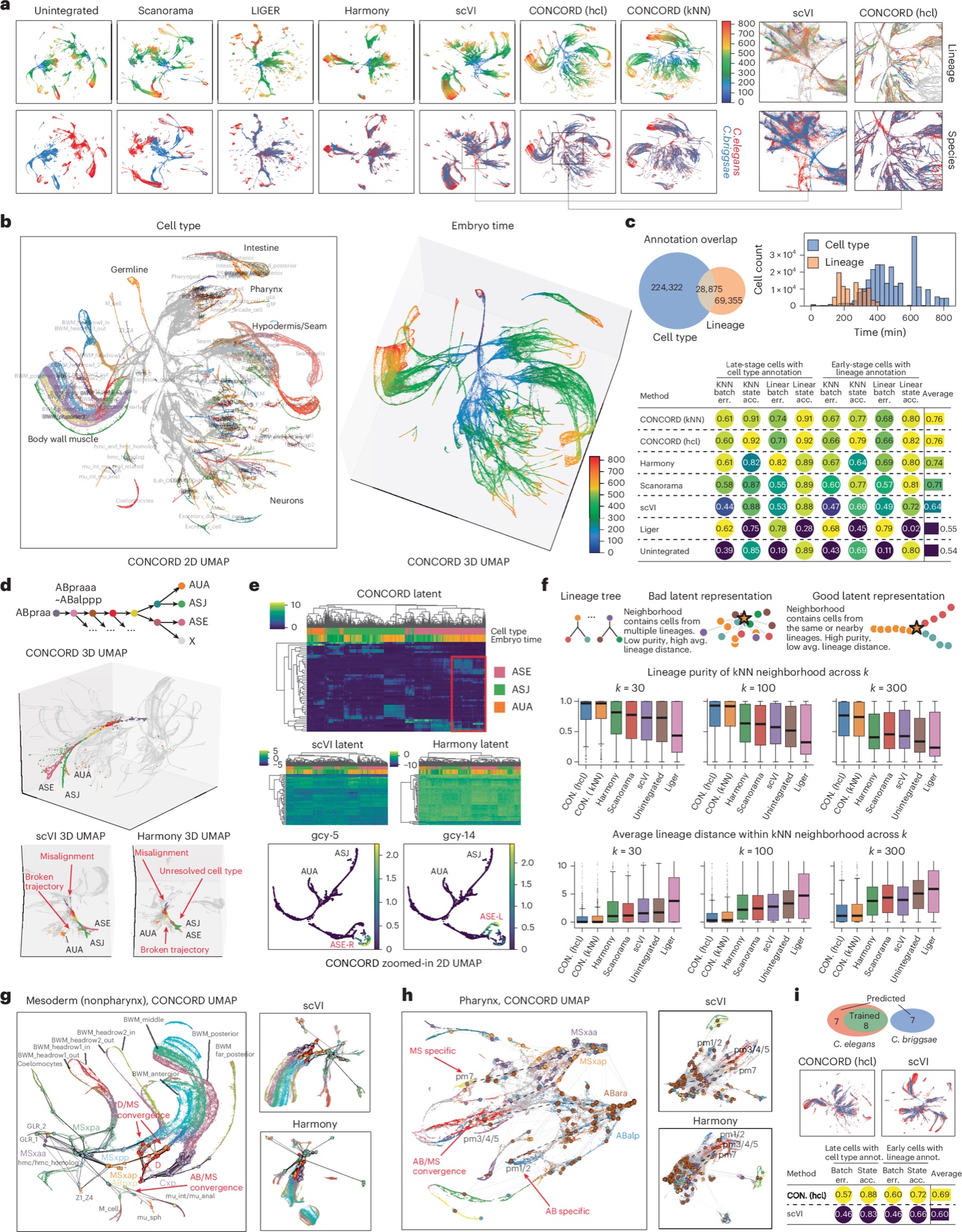
CONCORD: coherent cell-state representations
A self-supervised framework for integrating, denoising, and reducing single-cell data while preserving local geometry and global topology.
Lineage-labelled trajectories in the CONCORD-learned cell-state spaceA focused view of the cross-species embryogenesis atlas learned by CONCORD. Cropped from Figure 4b, Nature Biotechnology (2026). Source ↗ · CC BY 4.0 ↗
What it shows
Dataset-aware and hard-negative sampling let a minimalist contrastive model resolve complex trajectories across batches, technologies, and species.
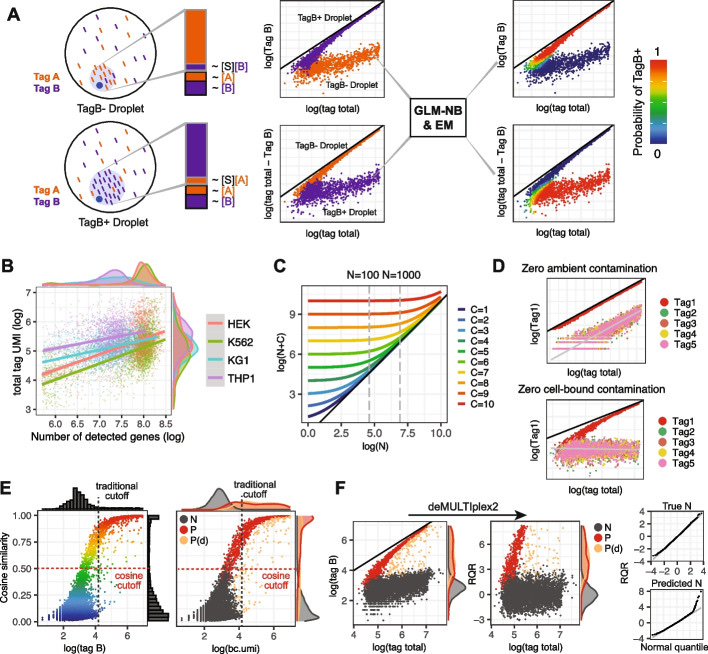
A statistical method for recovering sample identity and doublets from multiplexed single-cell experiments with noisy or unbalanced tag counts.
The core contamination model separates true tag signal from cell-bound and ambient background. Cropped from Figure 1a, Genome Biology (2024). Source ↗ · CC BY 4.0 ↗
What it shows
Mechanistic contamination models, negative-binomial GLMs, and expectation–maximization retain more high-confidence singlets.
Developmental trajectory of pre-hematopoietic stem cell formation
Single-cell transcriptomics resolved the endothelial-to-hematopoietic transition and the molecular progression toward pre-HSC identity.
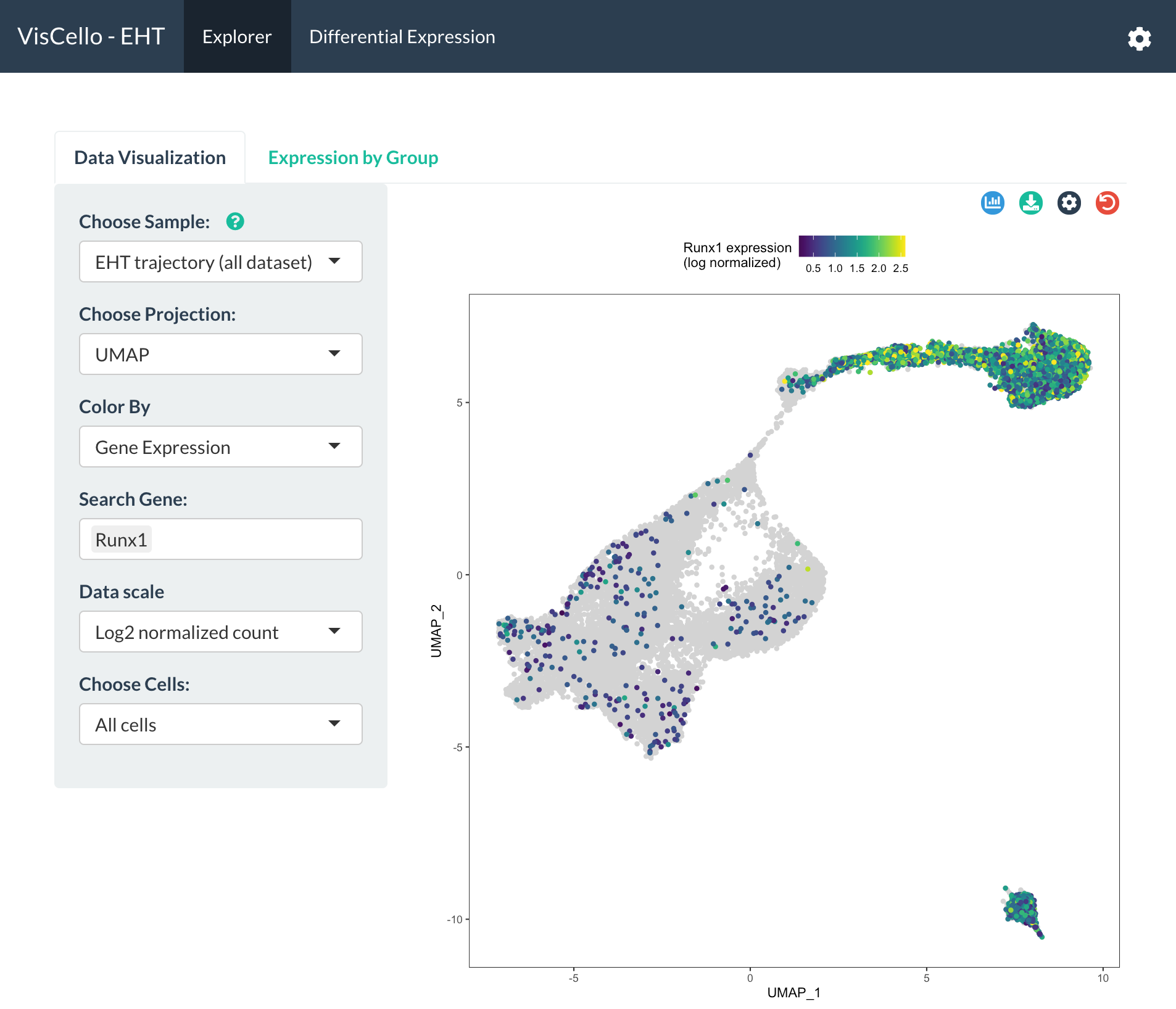
VisCello-EHT enables interactive exploration of gene expression across the endothelial-to-hematopoietic trajectory. Project interface screenshot. Source ↗
What it shows
A continuous endothelial-to-hematopoietic trajectory revealed a developmental bottleneck before hemogenic endothelium and two temporally distinct hematopoietic outputs.
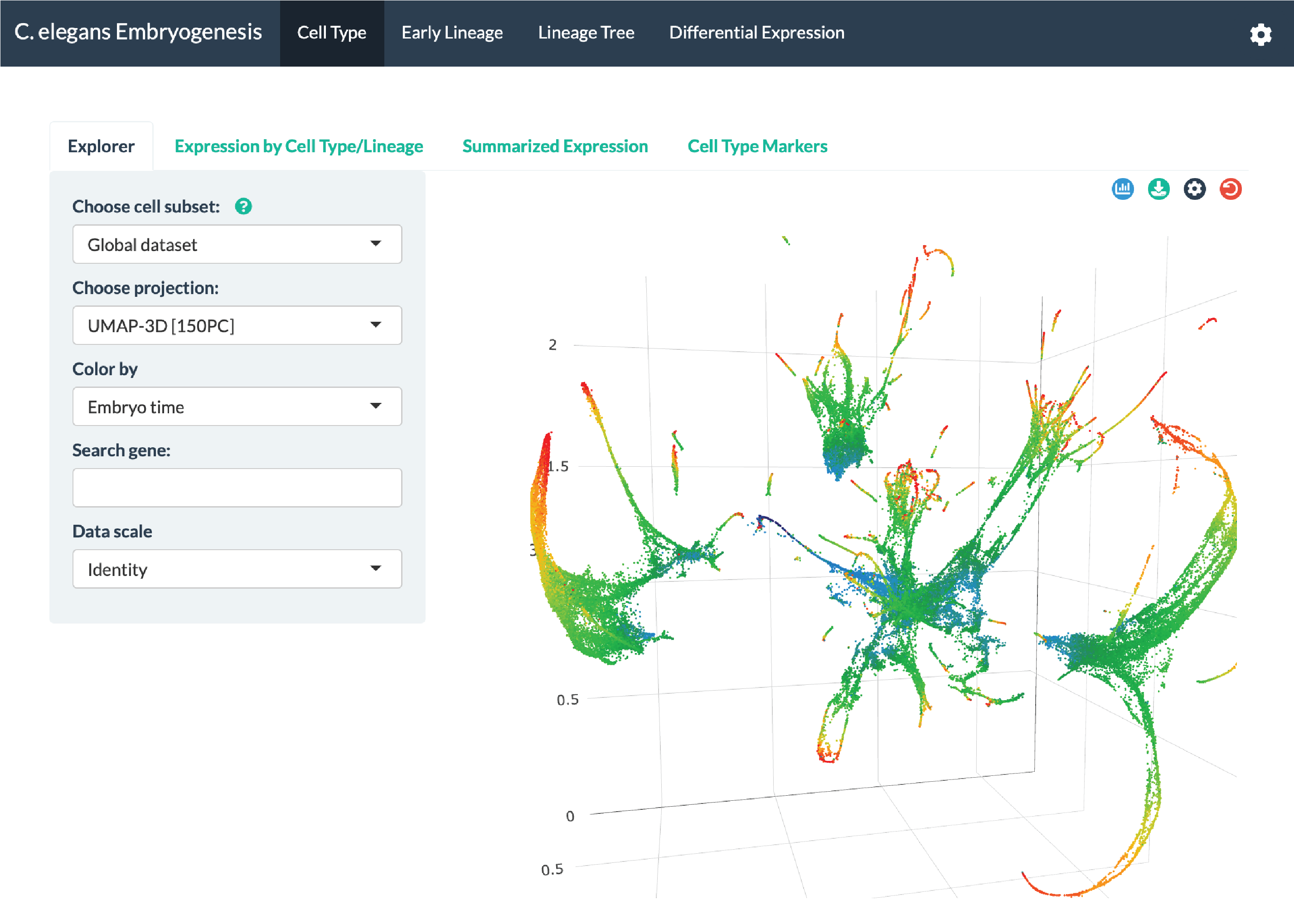
A lineage-resolved molecular atlas of C. elegans embryogenesis
A single-cell atlas connected transcriptional states to the invariant embryonic lineage, revealing how lineage history and cell fate organize development.
VisCello enables interactive 3D exploration of the C. elegans embryogenesis atlas. Project interface screenshot. Source ↗
What it shows
More than 86,000 single-cell transcriptomes were mapped onto the known lineage, reconstructing developmental trajectories for nearly every embryonic cell type.